
The Infinite Game
Why Nations Disappear but We Panic Over Quarterly Goals

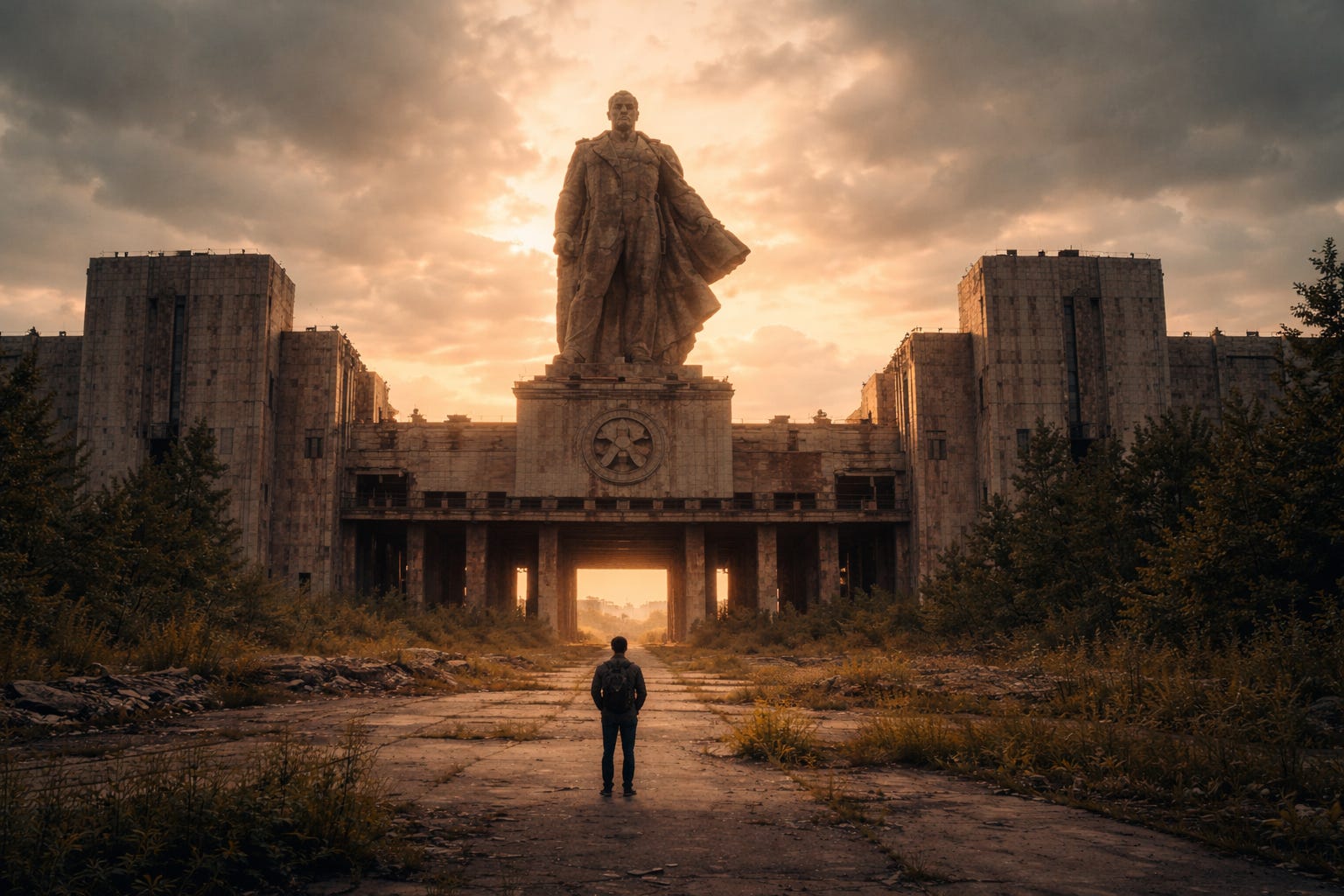
Two hundred years ago, the United States was a fraction of the territory it is today. In 1803, the Louisiana Purchase doubled the young nation’s size overnight. Florida came in 1819. Texas in 1845. What is now the continental United States didn’t exist as we know it until the mid-1800s - just a handful of generations ago.
The Soviet Union, one of the greatest superpowers of the 20th century, collapsed in 1991. It simply ceased to exist. Borders redrawn. Ideology abandoned. Gone.
Latvia, where I was born, didn’t exist as an independent nation 100 years ago. It appeared, disappeared under Soviet occupation, and reappeared again in 1991.
Nations - these massive structures we build entire identities around - appear and vanish like sandcastles at high tide.
And yet.
We panic over quarterly targets. We lose sleep over missed deadlines. We attach our entire sense of worth to whether we hit our revenue goals this month, whether our LinkedIn post gets enough engagement, whether we get promoted this year.
We live like there is no tomorrow, racing from one dopamine hit to the next, from one achievement to the next goal, never stopping, never resting. We are so engulfed in our small lives, our small businesses, our small daily errands that we’ve forgotten something fundamental:
We are actually playing an infinite game.
And the target at the end? We cannot miss it. It’s so inevitable, so huge, that we will all reach it no matter what we do.
We will die.
That’s the goal we’re actually racing toward. And it’s the one goal we absolutely cannot fail to achieve.
So why are we living in constant terror of missing everything else?
The Scarcity That Shaped Me
I grew up in Soviet Latvia in the 1980s. We had coupons for sugar. Bananas were a luxury product - you couldn’t just buy them. On rare occasion my mom or someone else would bring them from Moscow. They were green and I would store them at the top of the kitchen closet to ripen. And then, when they were ready, would take one and slowly enjoy every bite.
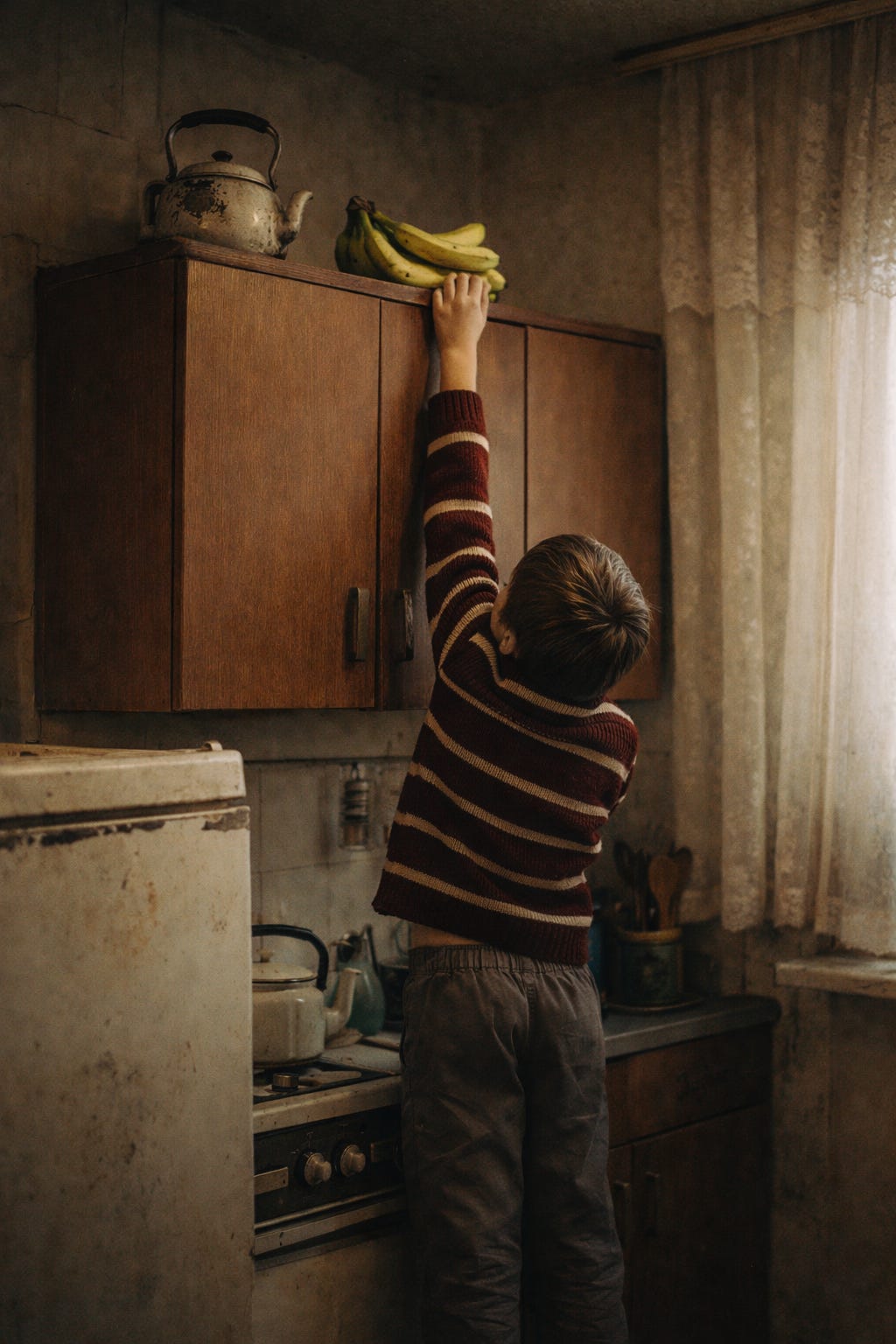
There was a central planning system that was supposed to distribute resources fairly, but what it actually created was scarcity. Not because there wasn’t enough, but because the system was built on the assumption of scarcity.
When the Soviet Union collapsed in 1991, something strange happened.
For a brief period, there was nothing. The old system was gone, the new one hadn’t formed yet, and suddenly, the shelves were emptier than before. Chaos. Uncertainty. Real scarcity.
But then, almost overnight, everything appeared.
Western goods flooded in. Bananas. Coca-Cola. Products we’d never seen. It was overwhelming. And expensive.
Around that same time, I went to Germany for a tennis competition. I was 12 or 13 years old.
I remember walking into the tournament venue and seeing tables full of free drinks. Free Gatorade. Free food. As much as you wanted.
I couldn’t believe it.
In my world, you rationed. You saved. You didn’t waste. And here were these German kids just... taking what they needed and leaving the rest.
The material wealth of the West was intoxicating. It felt like proof that their system worked and ours didn’t.
But what I didn’t understand then - what took me decades to see - was that the scarcity mindset didn’t disappear just because the products appeared.
The scarcity was never really about the bananas. Or Gatorade.
It was an operating system. A way of seeing the world. A belief that there is not enough, so I must fight to survive.
And that operating system followed me - into tennis, into business, into every relationship I tried to build, into my family and raising my children.
Survival of the Fittest
I became a two-time Latvian Tennis Champion in doubles. I got a scholarship to play in the United States. On paper, I succeeded.
But here’s what nobody saw:
I wasn’t playing tennis because I loved it. I was playing because I had to survive.
I wasn’t one of those naturally athletic types. The other kids on the court were bigger, stronger, more athletic. I had to prove I could compete. I had to be the best or I would be nothing.
Tennis became my survival mechanism.
Every match was life or death. Every point mattered. Winning wasn’t about joy - it was about proving I wouldn’t be left behind, that I could escape the poverty and chaos of post-Soviet Latvia, that I could make it.
And I did make it. I got the scholarship. I went to America. I saw even more abundance - an entire country built on the belief that you can have anything if you work hard enough.
But the scarcity inside me didn’t go away.
I carried it into my corporate career. I became a Vice President at Swedbank by age 27. I built the perfect success mask. I had the title, the salary, the respect.
And I was spiritually empty.
Because I was still running the same program: Win or die. Achieve or disappear. There is not enough, so you must take more.
No matter how much money I made, I was scared that I will not have enough and I would loose it. And eventually there was not enough and I lost it.
This is what I call the survival of the fittest mindset. And it’s not just my story - it’s the story of our entire civilisation for the past 200 years.
The Materialist Turn: How We Got Here
For most of human history, we didn’t organise our lives around material accumulation. Honestly - we are the only living creature so obsessed with accumulating wealth.
Before the Industrial Revolution (late 1700s–1800s), most societies were embedded in rhythms - seasonal, communal, relational. You produced what you needed. You traded within relationships. Markets existed, but they served life; they didn’t define it. Money was means; not the goal itself.
Then something shifted.
Industrialization didn’t just change how we produced goods - it changed why we exist.
Suddenly, the organising principle of life became material production. Output. Growth. Efficiency. Progress measured in tons of steel, miles of railroad, units manufactured.
And two great ideological systems emerged from this shift, both promising the same thing:
Achieve material success, and you will be happy.
Capitalism said: Accumulate individually. Work hard, compete, win, and you’ll have everything you need. The market will reward merit. Success is yours to earn.
Communism said: Accumulate collectively. Work together, distribute fairly, and everyone will have enough. The state will ensure equality. Success is ours to share.
Both sounded different. Both claimed to be opposites.
But they were - and are - children of the same materialist logic.
Both assume that human fulfilment comes from material conditions. Both organise society around production and consumption. Both create systems where your worth is tied to your output.
The only difference is who controls the means of production - private owners or the state.
But the core belief is identical: Material success equals human flourishing.
And that belief is a lie.
The Enemy: Scarcity Thinking
Underneath both capitalism and communism is the same poison: scarcity.
The belief that there is not enough.
Not enough resources. Not enough time. Not enough success to go around.
So we must compete. We must win. We must take more, achieve more, produce more, or we will be left behind.
This is the operating system running our world right now.
It drives nations to war over resources. It drives corporations to crush competitors. It drives individuals to burn out chasing goals that don’t actually fulfil them.
And the result?
Growing inequality and concentration of power, because money equals power. The richest are getting richer. The poorest are getting poorer. Despite all our knowledge, all our technology, all our so-called progress, the gap is widening.
Not because there isn’t enough. There is abundance on this planet. Enough food. Enough resources. Enough space.
But we have scarcity in our minds.
And that scarcity creates competition as a survival mechanism - not as play, not as a joyful test of skill, but as a fight to the death.
Look at professional sports. It’s become a massive business, and in the process, we’ve forgotten how to play. Children aren’t encouraged to enjoy the game - they’re pushed to win at all costs, to secure scholarships, to turn their passion into profit.
The same thing happened to me. Tennis stopped being fun the moment it became my ticket to survival.
Look at business. We talk about “competition” like it’s a virtue, but what we really mean is: Beat the other guy or you’ll starve.
This isn’t healthy competition. This is trauma.
And it’s killing us - physically, mentally, spiritually.
What My Children Taught Me
I have five children. My wife has six sons.
It is chaos. Beautiful, exhausting, expensive, humbling chaos.
And my children have taught me something I couldn’t learn in any boardroom, any tennis match, any self-help book, or retreat:
Let go of the attachment to results.
I was a fatherless child. I grew up without a healthy masculine model. So when I became a father, I overcompensated. I was too attached. I wanted to ensure my kids had everything that I did not have, to protect them from the pain I experienced, to control their wellbeing.
I was running the same scarcity program: If I don’t do this perfectly, they will suffer.
But my children kept showing me - gently, persistently - that life doesn’t work that way.
They reminded and actually forced me to take it easier. To play. To stop being so serious about everything.
Because here’s the truth: Business is a game. Life is a game. And we’ve forgotten how to play.
We’re so busy trying to win that we’ve lost the joy of simply being in the game.
The Infinite Game
What if I told you that you cannot miss the goal and you cannot loose?
What if the target is so big, so inevitable, that no matter what you do, you will reach it?
Because you will.
We all will.
At the end of this journey, there is only one guaranteed outcome: we will die. We will leave this body, this business, this identity behind.
There is no prize for “Best Human on the Planet.” No nation will receive an award for being the Greatest Nation in History. No business will be crowned the Ultimate Winner of Capitalism.
All of it - all of it - is temporary.
Nations appear and disappear in 200 years. Empires rise and fall. Businesses thrive and collapse.
And yet, we are living like our monthly sales goals are life or death.
This is the shift we need to make:
From finite games (where the goal is to win) to the infinite game (where the goal is to keep playing).
In a finite game, there are winners and losers. There are clear rules. There is an endpoint.
In an infinite game, there is no final winner. The point is not to win - it’s to continue the game, to keep evolving, to keep contributing.
And here’s what changes when you realize you’re playing an infinite game:
The pressure disappears.
Not because you stop caring. Not because you stop building, creating, striving.
But because you stop letting external goals determine your worth.
You stop running on fear and scarcity.
You start playing from a place of abundance and curiosity.
You realise that success isn’t about hitting the target - it’s about how you move while you’re here.
From Human Doings to Human Beings
We have become Human Doings.
Our entire identity is wrapped up in what we achieve, what we produce, what we accumulate.
We introduce ourselves by our job titles. We measure our days by our to-do lists. We judge ourselves by our output.
And we are exhausted.
Studies show that 70-80% people spend their time in constant stress, anxiety, worry.
Because doing is infinite. There is always more to do. More to achieve. More to prove.
But being is different.
Being is about presence. Connection. Awareness.
Being is about remembering who you are underneath the titles, the goals, the achievements.
And the only way to remember is to stop. To pause. To step back from the race and ask:
What is this human experience really about?
Not what you’ve been told it’s about. Not what the system says it’s about.
What does it feel like, in your body, in this moment, to be alive?
When you touch that - when you really feel it - the game changes.
Your inner state - your energy - shifts instantly.
The goals don’t disappear. The work doesn’t stop.
But the desperation does.
The fear does.
The constant, gnawing anxiety that you’re not enough, that you’re falling behind, that you’re going to miss the target - it dissolves.
Because you realise: I cannot miss the target. The target is inevitable.
So I might as well enjoy the journey.
The Invitation
I’m not asking you to abandon your business. I’m not asking you to stop setting goals or striving for success.
I’m asking you to change the operating system underneath it all.
To replace scarcity with abundance.
To replace survival with play.
To replace finite competition with the infinite game.
Because right now, we are at a crossroads.
The old systems - capitalism, communism, materialism - are showing us their cracks. The inequality is growing. The burnout is epidemic. The disconnection is palpable.
We thought material success would make us happy. We were wrong.
And now, we have a choice:
Continue running the same program, or rewrite it.
Continue believing there’s not enough, or start seeing the abundance that’s already here.
Continue treating life like a finite game we must win, or start playing the infinite game with curiosity and presence.
This is the shift we must make - not as nations, not as systems, but as individuals.
Because the systems won’t change until we do.
And we won’t change until we stop, breathe, and remember:
We are not Human Doings. We are Human Beings.
And we are all players in an infinite game.
So let me ask you:
How would it feel if you realized, right now, that you cannot miss the target?
That the goal is inevitable, and the only question is: How will you play while you’re here?
What would you do differently today?
What would you let go of?
What would you finally allow yourself to enjoy?
Because the game is infinite.
And you’re already in it.
If this resonates with you - if you’re feeling the weight of the finite game and want to explore what it means to play differently - I work with individuals, couples, and teams who are ready to deconstruct their operating systems and return to what’s fundamental.
You can learn more about my work at kalans.me.
Until next time,
Matiss